This summarizes a selection of applications for the Experimental Radio Service received by the FCC during September-December 2012. These are related to LF and HF propagation, cognitive radio, satellite telemetry, ultra-wideband (UWB), ground-penetrating and synthetic-aperture radar, mobile broadband, aerial communications (balloons), LTE, managed access, military communications, Wi-Fi, GPS, sensor networks, and MVDDS. The descriptions are sorted by the lowest frequency in the application.
Archive for the ‘Ad-hoc Networks’ Category
Experimental Radio Applications at the FCC
Thursday, January 3rd, 2013Posted in 3G, 4G, Ad-hoc Networks, Aviation, Backhaul, Cognitive Radio, Contraband Cell Phones, Electronic Warfare, Experimental, GPS, Ground Penetrating Radar, Heterogeneous Networks, High Frequency, Low Frequency, LTE, Managed Access, Medium Frequency, Military, Mobile Broadband, MVDDS, Propagation, Radar, Satellite, Sensors, Space Communications, Synthetic Aperture Radar, Telemetry, Ultra-wideband, Uncategorized, Wi-Fi | No Comments »
Experimental Radio Applications at the FCC
Monday, April 2nd, 2012This summarizes a selection of applications for the Experimental Radio Service received by the FCC during January, February, and March 2012. These are related to radar, Amateur Radio, spread spectrum, white space, spacecraft telemetry, propagation testing, satellites, smart grid, femtocells, machine-to-machine communications, ad hoc networks, 4G backhaul, electronic warfare, and robotics. The descriptions are listed in order of the lowest frequency found in the application.
Posted in 3G, 3GPP, 4G, Ad-hoc Networks, Amateur Radio, Antennas, Automotive, Aviation, Backhaul, Bluetooth, Broadband Access, Electronic Warfare, Experimental, Femtocells, High Frequency, IEEE 802, IMT-Advanced, Interferometry, LTE-Advanced, M2M, Millimeter-wave, Mobile Broadband, Propagation, Radar, Satellite, Sensors, Smart Grid, Space Communications, Telemetry, Uncategorized, White Space, Wi-Fi | No Comments »
Experimental Radio Applications at the FCC
Saturday, August 27th, 2011This summarizes a selection of applications for the Experimental Radio Service received by the FCC during June and July 2011. These are related to AM broadcasting, cognitive radio, land vehicle testing, ultra-wideband, ground penetrating radar, synthetic aperture radar, LTE, autonomous aerial refueling, SONAR telemetry, surveillance radar, wind-farm obstruction lighting, seismic activity detection, directed energy weapons, unmanned helicopter flights, precision electronic warfare, shaped-offset QPSK, Ku-band antennas, TV white space, and missile telemetry. The descriptions are sorted by frequency.
Posted in 4G, Ad-hoc Networks, AM Broadcasting, Antennas, Aviation, Cognitive Radio, Dynamic Spectrum Access, Electronic Warfare, Experimental, LTE, Mesh, Military, Millimeter-wave, Mobile Broadband, Modulation/Demodulation, Radar, Satellite, Telemetry, UAS, UAV, Ultra-wideband, White Space, Wi-Fi, Wireless | No Comments »
Experimental Radio Applications at the FCC
Wednesday, April 13th, 2011This summarizes a selection of applications for the Experimental Radio Service received by the FCC during March 2011. These are related to VHF propagation, satellite communications, TV white space, military communications, radar, software defined radio, aircraft broadband services, adaptive networks, peer-to-peer networks, intermodulation testing, unmanned aircraft systems, maritime broadband communications, border surveillance, target acquisition, and millimeter wave propagation. The applications are sorted by frequency.
Posted in Ad-hoc Networks, Amateur Radio, Antennas, Aviation, Broadband, Cognitive Radio, Electronic Warfare, Experimental, Femtocells, FM Broadcasting, GSM, Interference, Intermodulation, Maritime, Military, Millimeter-wave, Peer-to-Peer, Picocells, Propagation, Public Safety, Radar, Satellite, Sensors, Software Defined Radio, Space Communications, Spectrum, Telemetry, Terminals, UAS, Video, White Space, Wi-Fi, WiMAX | No Comments »
Experimental Radio Applications at the FCC
Wednesday, February 9th, 2011This summarizes a selection of applications for the Experimental Radio Service received by the FCC during January 2011. These are related to land mobile radio, VHF propagation study, satellite communications, network-centric warfare, TV white space, software defined radio (SDR), military command and control, remotely piloted aircraft, LTE, radio direction finding, OpenBTS, Identification Friend or Foe (IFF), peer-to-peer communications, flight test telemetry, automotive telemetry, WiMAX, surveillance radar, vehicle radar systems, and millimeter-wave communications.
Posted in 3GPP, 3GPP2, 4G, Ad-hoc Networks, Antennas, Automotive, Aviation, Broadband, Broadband Access, Electronic Warfare, Experimental, GPS, GSM, High Frequency, Land Mobile, Location, LTE, Military, Millimeter-wave, Peer-to-Peer, Propagation, Public Safety, Radar, Radiolocation, Satellite, Space Communications, Spectrum, Telemetry, Terminals, TV Broadcasting, UAV, White Space, Wi-Fi, WiMAX, Wireless | No Comments »
FCC Seeks Input on Dynamic Spectrum Access
Wednesday, December 15th, 2010As a prelude to proposing rules, the FCC is seeking comment on many issues related to dynamic spectrum access technologies, including how they can increase spectrum capacity and what the Commission can do to promote their use.
Posted in Ad-hoc Networks, Broadband, Cognitive Radio, Dynamic Spectrum Access, Experimental, FCC, Public Safety, R&D, Spectrum, White Space | No Comments »
Experimental Radio Applications at the FCC
Sunday, December 5th, 2010This summarizes a selection of applications for the Experimental Radio Service received by the FCC during November 2010. These are related to ultra-wideband (UWB), radar, TV white space, millimeter-wave, mobile satellite terminals, UMTS, military networking, microwave interferometry, flight test telemetry, public safety, and seismic data acquisition.
Posted in Ad-hoc Networks, Antennas, Aviation, Broadband, Experimental, Interferometry, Military, Millimeter-wave, Public Safety, Radar, Satellite, Spectrum, Telemetry, Terminals, Ultra-wideband, UMTS, White Space, Wireless | No Comments »
Experimental Radio Applications at the FCC
Saturday, October 2nd, 2010This summarizes a selection of applications for the Experimental Radio Service received by the FCC during September 2010. These are related to radar, military communications, ad hoc networks, GPS, avionics, WiMAX, maritime identification systems, TETRA, public safety, land mobile interoperability, prison cellphone management, air-ground radiotelephone service, picocells for cable systems, transportable satellite antennas, unmanned aircraft systems, consumer satellite terminals, and low-profile satellite antennas.
- Northrop Grumman filed an application for special temporary authority in support of airborne experimental testing of the STARLite Tactical Radar System a small, lightweight (65 pounds) radar used for tactical reconnaissance by Unmanned Aerial Systems. Transmissions will be between 16.2 to 17.3 GHz. The radar has three modes: Synthetic Aperture Radar (SAR), Ground Moving Target Indicator (GMTI), and Maritime Moving Target Indicator. In the SAR mode, the radar imagery can be one of three forms: parallel to the aircraft flight vector, along a specified ground path independent of the aircraft flight path, or a higher-resolution spot image. In the GMTI mode, the radar provides moving target locations overlaid on a digital map. The MMTI mode performs a similar function for targets over water.
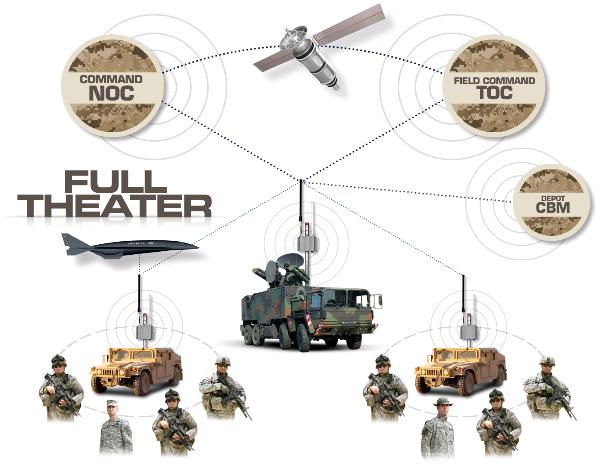
- DRS Tactical Systems, a supplier of rugged computer equipment for military environments, filed an application (with supporting exhibit) for experimental license to test a mobile radio gateway. In the test, the mobile node will be a High Mobility Multipurpose Wheeled Vehicle (Humvee) with a mast. Equipment will be Harris model RF-7800W-OU440 broadband Ethernet radios attached to a DRS gateway system. This system is intended aid military and commercial entities by providing complex gateway functionality while in motion. Operation will be on 4.94-4.99 GHz.
Posted in Ad-hoc Networks, Antennas, Aviation, Electronic Warfare, Experimental, Jamming, Land Mobile, Military, Network Protocols, Picocells, Public Safety, Radar, Radiolocation, Satellite, Telemetry, Terminals, UAS, Wi-Fi, WiMAX, Wireless | No Comments »
IEEE Standards Board Approves Sub 1 GHz 802.11 (Wi-Fi) Project
Thursday, September 30th, 2010Even though Wi-Fi is standardized for the 2 – 5 GHz frequency range, there is non-standard modified Wi-Fi equipment available that operates in the US 902-928 MHz ISM band. Vendors take the core technology and change the frequency.
The demand is, in part, from the smart grid community, who like it for linking to smart meters because of the band’s greater range and lower obstruction losses. A problem, though, has been lack of interoperability. Each vendor has its own implementation, and smart grid customers don’t want to be tied to one vendor.
Today the IEEE Standards Association’s Standards Board approved a request by IEEE 802 Working Group 802.11 to start a project that will amend the 802.11 standard to include sub 1 GHz operation. This project, under new Task Group 802.11ah, does not include TV white space frequencies; that’s being handled under Task Group 802.11af.
The most important thing this amendment will do is establish standard RF channel widths and center frequencies. Because 802.11 is an international standard, non-US allocation schemes will be considered as well.
Posted in Ad-hoc Networks, IEEE 802, M2M, Smart Grid, Standardization, Unlicensed, Wi-Fi, Wireless | No Comments »
IEEE 802.11 Working Group, on its way to 5 Gbps, celebrates 20 years of progress in wireless LANs
Monday, September 13th, 2010The IEEE Standards Association recognizes 20 years of progress in IEEE 802.11.
IEEE 802.11 Wireless Milestones:
- September 1990 – IEEE 802.11 project initiated with the concept of creating a WLAN standard for shared local communications interworking with the successful wired IEEE 802.3 (Ethernet) product
- 1997 – Standard released, supported 2 Mb/s data rates in the 2.4 GHz band
- 1999 – Improvements were added for increased data rates in the 2.4 GHz band and availability in the 5 GHz band
- 1999-2009 -The IEEE 802.11 wireless LAN blossomed in the home market. Also, users started to apply the devices to build community networks where incumbent telecommunications providers did not offer service
- 2009 – The IEEE 802.11n amendment provided another ten-fold increase in data rate (now peaking at 600 Mb/s) and added other radio range extension enhancements such as beamsteering
- 2010 and Beyond – The IEEE 802.11 Working Group celebrates 20 years of achievements
- IEEE 802.11 is working to increase data rates another ten-fold, to 5 Gb/s
- IEEE 802.11ac task group will extend IEEE 802.11n-like capabilities in the 5 GHz spectrum
- IEEE 802.11ad task group will develop an extension for operation at 60 GHz
- Other projects underway will provide dynamic management of the air interface, adaptations for vehicular use, mesh operation, interworking with cellular systems, and peer-to-peer link establishment
Posted in Ad-hoc Networks, Network Protocols, Wi-Fi | No Comments »
Experimental Radio Applications at the FCC
Wednesday, September 8th, 2010This summarizes a selection of applications for the Experimental Radio Service received by the FCC during August 2010. These are related to radar, military communications, mesh networking, unmanned aerial vehicles, satellite services, biomedical telemetry, aircraft telemetry, safe-driving systems, geophysical sensors, electronic warfare, smart grid, and antenna testing.
- INOVA Geophysical Equipment Limited filed an application (with supporting exhibits) to test a proprietary mobile radio system in the 30-36 MHz and 150-174 MHz bands. The radio links would be used to control remote geophysical seismic recording equipment, which INOVA manufactures. At the end of testing, INOVA plans to put the radio equipment into production and lease it to customers.

- Fortress Technologies filed an application for experimental license to test several of its secure mesh-networking products developed for military applications. Several exhibits are included but they are not publicly available due to a confidentiality request. Operation is to be on 4.9425-4.9875 GHz.
Posted in Ad-hoc Networks, Antennas, Aviation, DTV, Electronic Warfare, Experimental, Land Mobile, Location, Military, Millimeter-wave, Private Radio, Public Safety, Radar, Satellite, Smart Grid, Telemetry, Uncategorized, Unlicensed, Video, Wireless | No Comments »
Experimental Radio Applications at the FCC
Saturday, January 30th, 2010This summarizes a selection of applications for the Experimental Radio Service received by the FCC during January 25-29: radar, mobile broadband, auto-tracking antennas, millimeter wave, missile telemetry, astronomy research support.
- Powerwave, a wireless infrastructure vendor, files an application and supporting exhibits for experimental license to operate on 210-216 and 450-456 MHz in Santa Ana, California. The company wants to test operational and coverage aspects of Mobile Broadband Routable Internet (MBRI) users as they move about a campus setting. Hardware and software for handover, quality of service, and power control is to be tested.
Posted in Ad-hoc Networks, Antennas, Experimental, Millimeter-wave, Radar, Telemetry | No Comments »